Showing posts with label Weekly Health Tip. Show all posts

5.03.2012

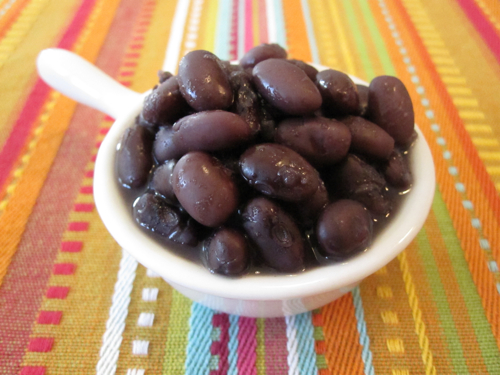
Benefits of Black Beans + Spicy Black Bean Burrito Recipe

Recent News about Black Beans
Black beans, also known as turtle beans, are legumes that are not only rich in flavor, but also in protein and fiber. Health benefits according the World’s Healthiest Food website include: 
Photo Credit: Weelicious
  •  Digestive track support
  • Blood sugar regulation benefits
  •  Heart health promotion
  • Better regulation of blood sugar
  • Antioxidant protection
  • Anti-inflammatory benefits 
Research shows a correlation between bean consumption and a reduced risk of type 2 diabetes, various cardiovascular diseases, and some types of cancer.


Recommendation
The Dietary Guidelines for Americans recommend eating 3 cups of legumes per week or ½ cup serving six days per week.

Want to get your first serving today? Try this recipe:
Spicy Black Bean Burrito
You don’t have to go to Chipotle to enjoy a delicious burrito. You can easily make one at home following this 15 minute, extremely delicious recipe (below)!

Ingredients:
            1/2 red onion, diced
            2 cloves garlic, chopped
            1 red bell pepper, diced
            2 cups or 1 15 oz can (BPA-free) black beans
            2 TBS extra virgin olive oil
            2 tsp chili powder
            1/8 tsp cayenne pepper
            salt and pepper to taste
            2 whole wheat tortillas
            2 oz low-fat cheese
            1 cup prepared salsa
            goat cheese (optional)

Directions:
  • Dice onions and chop garlic and let sit for at least 5 minutes to bring out their hidden health benefits
  • Dice bell peppers
  • Healthy Sauté onions and bell peppers for 5 minutes
  • Add garlic, black beans, olive oil, chili powder, cayenne pepper, salt and pepper to taste
  • Wrap 1/2 of mixture and 1 oz of low-fat cheese into each of the two tortillas
  • Top with salsa, and goat cheese (if desired).

ENJOY!


Resources:
The World’s Healthiest Foods website has more info about the nutritional profile of black beans, healthy recipes and the latest news about black beans.

4.18.2012

Laugh Away Your Stress!


Happy National Stress Awareness Month and National Humor Month!
This April is the 20th year of National Stress Awareness Month, sponsored by The Health Resource Network (HRN)—a non-profit health education organization. During this month, stress experts and other health care professionals collaborate to create awareness about the dangers of stress that are rampant in today’s stressed-out world. Materials on strategies to relief stress are also shared.
Photo Credit: Dreamstime
Consequences of Stress
Stress can result from everyday challenges life that presents us with. However, when stress is managed poorly, it can lead to serious health consequences like anxiety, mood swings, loss of energy, muscle tension, fatigue, headache, high blood pressure, heart disease and more 

Not sure how to relief your stress? Laugh away your stress!

This month also marks the 36th year that National Humor Month is being celebrated.

Photo Credit: The Laughter Workout
Purpose of National Humor Month (NHM)
National Humor Month was founded in 1976 by best-selling humorist Larry Wilde, Director of The Carmel Institute of Humor. He has written over 50 books dealing with humor. The purpose of NHM, according to The National Humor Month website, is “to heighten public awareness on how the joy and therapeutic value of laughter can improve health, boost morale, increase communication skills and enrich the quality of one's life.”

Benefits of Humor
Scientific research shows that laughter is healing and combats debilitating stress and burnout. Dr. Madan Kataria, who initiated the first laughter yoga club in India, found that laughter can help relax muscles, lower blood pressure, improve blood circulation, increase oxygen levels, and boost your immune system. He views laughter as the “master key” to good health.

Wellesse provides a few easy tips for relieving stress:
  • Try deep breathing, meditation, or praying
  • Laugh - read a joke or think of a funny memory
  • Go for a walk or run - exercise is a great stress reliever
  • Talk to someone about why you are feeling stressed
  • Watch a funny old movie or home videos that makes you laugh
  • Get a massage
Photo Credit: Expatriate Games

More Resources:
Wellesse for more stress relief tips
National Humor Month Website
The Laughter Workout

4.11.2012

Try me: Carrot + Parsley Salad

Looking for a refreshing and healthy dinner idea? Read on!

Benefits of carrots
Carrots provide great antioxidant nutrients, especially beta-carotene. These antioxidants have cardiovascular benefits and fight against cancer.

Benefits of parsley
Parsley is a well-known consumed herb with numerous benefits in taste and health. Parsley has been found to help fight against colon and postrate cancer, it's rich in antioxidants, has cardiovascular benefits, and provides a ton of vitamin K.

A combination of these two power foods will not only leave you satisfied, but will do your body, your heart and your overall health a lot of good. You'll wake up feeling great after eating this for dinner!

Photo Credit: The Family Kitchen

Ingredients:
6 carrots, peeled
1 bunch parsley, minced
1 clove garlic, smashed and minced
3 tablespoons lime juice
4 tablespoons olive oil
1/2 teaspoon sea salt
1 teaspoon cumin seed, rough chopped
1 teaspoon fresh ground pepper
1/4 teaspoon red pepper flakes

Instructions:
  1. Shred the carrots into a large bowl and toss with the parsley.
  2. In a small bowl, whisk the olive oil into the lime juice. 
  3. Whisk in all the remaining ingredients.
  4. Drizzle dressing over the vegetables, and toss. 
  5. Check acid and salt levels, and adjust as needed.

ENJOY!

4.06.2012

Whole Grains = More Gain

What is a whole grain?  
Though we are bombarded by articles and advertisements dealing with its importance many of us don’t know what a whole grain is. By understanding what whole grains are, we will be able to make wiser and healthier food choices daily.
Photo Credit: Inner Scientist
The diagram breaks down the components of a grain and the nutrients that are within each part of the kernel/grain.
Some examples of whole grains include whole wheat, oatmeal, whole-grain cornmeal, brown rice, whole-grain barley, whole rye, and buckwheat and, even, spelt.

Recommended daily Servings
Every 5 years, the U.S. Department of Health and Human Services and the U.S. Department of Agriculture post Dietary guidelines for Americans. According to the guidelines presented in 2010, Americans are advised to consume at least half of all grains as whole grains and increasing intake by replacing refined grains for whole grains daily.
 
Photo Credit: Health Lob
Benefits of eating whole grain
A team of Harvard researchers is connecting the link between eating whole grains and better health.  A few of the many benefits they have found:
  • Decreased Cardiovascular Disease and it’s risk factors such as heart disease and diabetes
  • Decreased risk of Type 2 diabetes by 21%
  • Improved digestive and overall health
Determining whole grain products
The next time you go shopping, please read the label statements and ingredients to know which product is and not whole grain. Pay attention to key words “whole” or “100% whole”

Is It Whole Grain or Not?

Healthy Life provides an abundance of and more detailed information regarding ways to choose whole grain products.
 Daily Dose of Whole Grains looks something like this:
·  1/2 cup cooked oatmeal
·  1/2 cup cooked 100% whole-grain pasta
·  1/2 cup cooked brown rice or whole-grain barley
·  1 regular slice of 100% whole-grain bread
·  1 cup of whole-grain ready-to-eat cereal (flakes or rounds) or 11⁄4 cup puffed
ENJOY!

For more information
Harvard School of Public Health: The Nutrition Source website
Guidance on Whole Grain Label Statements
Whole Grains Resource Guide website
Dietary Guidelines for Americans 


3.28.2012

"The healthiest oil on earth!"


In the past, studies showed that coconut oil was bad for consumption because of its saturated fat content. However, thanks to modern research, coconut oil has been proven to be “the healthiest oil on earth.” 
Photo credit: The Healing Canopy

Why is this oil better than others?
Coconut oil’s secret lies in its fat molecules. Saturated or unsaturated oils found in most vegetable oil, meats, and eggs are made up of long chain fatty acids (LCFA). Coconut oil, however, is composed of medium chain fatty acids (MCFA), which the body can more easily break down.
What are the benefits?
Coconut oil has been used all over the world for many different reasons, including health, cooking and even hair and skin.
The Coconut Research Center lists the following modern health benefits of coconut oil, including:

·     Helps relieve symptoms and reduce health risks associated with diabetes.
·     Helps protect the body from breast, colon, and other cancers.
·     Functions as a protective antioxidant.
·     Promotes loss of excess weight by increasing metabolic rate.
·     Improves insulin secretion and utilization of blood glucose

For more information regarding coconut oil please visit The Coconut research center website for articles, studies, books, news, medical research, and more.

Cooking with coconut oil adds a lasting coconut flavor to food. Try this easy and delicious recipe from The New York Times.

Coconut Oil Roasted Sweet Potatoes
 
Andrew Scrivani for The New York Times

1 1/2 tablespoons virgin coconut oil
1 3/4 pounds sweet potatoes, peeled and cut into 1/2-inch chunks
2 teaspoons light brown sugar, packed
3/4 teaspoon kosher salt
1/4 teaspoon ground black pepper
1/4 teaspoon grated nutmeg.

1. Heat oven to 350 degrees. Melt the coconut oil in a small saucepan over low heat.
2. In a large bowl, toss together potatoes, coconut oil, sugar, salt, pepper and nutmeg.
3. Spread the potatoes in an even layer on a large baking sheet. Roast, tossing occasionally, until soft and caramelized, about 1 hour. 


Enjoy!

3.14.2012

What’s In Your Fruit Salad?

Pineapple? Orange? Star fruit? Peach? Mango?

Photo Credits: Steamy Kitchen
Did you know…
  • The recommended daily servings of fruit is between 2-5, depending on age and level of activity.
  •  Incorporating fruits that are vibrant and rich in color will provide a variety of vitamins, plant nutrients and minerals.
  • Those who consume 3-5 servings of fruit are less vulnerable to chronic disease such as stroke, type 2 diabetes, some cancers, and even heart disease.
  • Fruit makes a delicious side dish, snack, dessert, even included in the main dish.
  • Fruit can also be consumed frozen, dried, canned, and juiced. These can all count towards your recommended daily servings.
  • By trying new fruits, you can get some beneficial nutrients, like vitamin E and C, fiber, and carotenoids, that you might be missing in your diet.

5 exotic fruits to try (recipes included):
Not sure how much a cup of fruit is? Check out one of our previous health tips blog post
"How Much Is A Cup of Fruits and Vegetables."

Resources:

The Center for Disease Control site also provides numerous and general information about the importance of consuming a variety of fruits.

3.07.2012

Weekly Health Tip: Eat Color-full


How colorful is your meal?
As we finish up the first week of National Nutrition Month, our Dietitians want to encourage you to shape up your plate one day at a time by ensuring that your meal is colorful and tantalizing. There are countless benefits of eating a variety of colorful fruits and vegetables. An important one is fighting diseases, which Moveable Feast is passionate about.
Photo Credit: Kalyn's Kitchen
How do colorful vegetables fight diseases?
The pigments that give these foods their vibrant colors help to shield us from all sorts of toxins and chemicals. Those pigments consist of phytochemicals, which enables the body to fight diseases.

Our Dietitians came up with a list of colorful vegetables that you can try to incorporate in your diet.

GREEN: Fights Cancer and Age-related diseases
1.       Kale
2.       Asparagus
3.       Spinach
4.       Avocado*
5.       Swiss Chard

*Avocado is botanically a fruit, but nutritionally a vegetable.

RED: Reduces prostate cancer, boosts immune system
1.       Tomatoes
2.       Beets
3.       Radishes
4.       Peppers
5.       Radicchio

WHITE: Reduces the risk of getting some cancers and activates B and T cells
1.       Jicama (Mexican Yam)
2.       Mushrooms
3.       Potatoes
4.       Parsnips
5.       Cauliflower

With one colorful vegetable at a time, you will feel full, fight disease and restore your health.

Extra Resources:
General information pertaining to fruits and vegetables
More colorful vegetables for you to try
List of vegetables you can freeze

3.01.2012

IT'S NATIONAL NUTRITION MONTH: Get Your Plate In Shape!


Today kicks off National Nutrition Month - something near and dear to our hearts here at Moveable Feast.
Every March, the Academy of Nutrition and Dietetics sponsor National Nutrition Month, a nutrition education and information campaign. The Academy creates awareness about the importance of making informed food choices and developing sound eating and physical activity habits.
Photo Credit: Academy of Nutrition and Dietetics
This year's campaign theme is “Get Your Plate in Shape.” The Academy provides a ton of useful tips on their website to show people how to make small changes to their plates daily.  
At Moveable Feast, where we provide food to home-bound people living with life-threatening diseases, delivering nutritionally appropriate meals to them is crucial. We understand how eating right can influence the health of our clients and their loved ones. We also know how important eating right is for ourselves and for YOU!
Luckily, we have three amazing Registered Dietitians at our fingertips. Every Wednesday in March, we will post healthy tips on realistic ways you can get your plate in shape. We'll also be updating our Facebook page to let you know what we're doing at Moveable Feast to observe National Nutrition Month. Stay tuned!

2.14.2012

Take Care of Your Heart this Valentine's Day

February is American Heart Month. So we thought it fitting to take a look at the heart from a different angle on Valentine’s Day!  

    
Photo credit goes go RainbowPlate
 
Heart Breakers!
Cardiovascular Disease (CVD), heart disease, and stroke contribute as the leading killers in the United States. According to the Center for Disease Control and Prevention, every 34 seconds, Heart Disease claims the life of someone. A study out of Stanford University found that people living with HIV or AIDS have a higher risk of developing CVD, due to inflammation caused by their HIV medications.  But it’s beatable! 

Fight whole heartedly!
Two ways these conditions can be tackled include eating healthy foods and exercising regularly. These steps can make all the difference in your overall health and lifestyle. 

Un-break your heart!
As you pick up ingredients for that romantic home cooked dinner with your special somebody, think of their heart. 

Start with these 5 heart healthy foods!
  1.  Almonds (heart healthy fats + aphrodisiac)
  2. Salmon (heart healthy fats)
  3.  Edamame or any soy foods (isoflavones)
  4. Blueberries (antioxidants)
  5. Dark Chocolate (antioxidants + aphrodisiac)

Happy Valentine's Day!